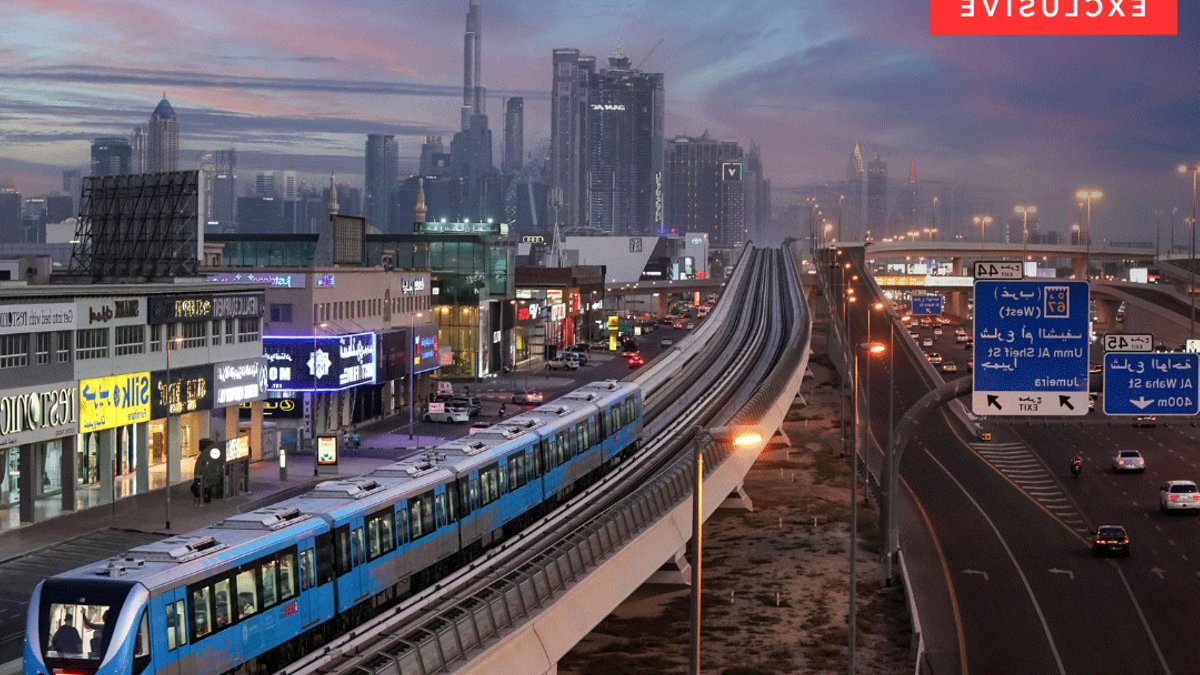
The Gulf’s next urban cycle is shifting focus from towering skylines to walkable, community-centric spaces. Professor Greg Clark, a global urbanist, highlights this transition as the region moves from “arrival” to “belonging.” The Gulf is known throughout the world for the height of its towers, the scale of its reclaimed islands, and the speed at which trading ports have been transformed. It’s been a remarkable story of growth and innovation that has transformed the region over the last 40 to 50 years.
Speaking to Arabian Business on the sidelines of LiveX in Abu Dhabi, Clark noted that Gulf cities like Dubai, Abu Dhabi, Doha, and Riyadh have evolved rapidly since the 1980s. Their iconic towers and hotels served as symbols of confidence and instruments of soft power, announcing the region’s presence on the global stage.
From skyscrapers to 10-minute walks
Now, demographic changes are reshaping priorities. Policies like the UAE’s Golden Visa and Saudi Arabia’s Premium Residency encourage long-term settlement, prompting residents to value what’s accessible within a short walk—shade, cafes, schools, and parks—over impressive skylines. Clark emphasizes that this shift is driven by demographic maturity, as the region moves from catering to short-term expatriates to attracting talent that seeks to settle and raise families.
Clark explains, “Once a city has been noticed, the question shifts from how it looks from the air to how it feels at street level.” This shift is reflected in master plans like Dubai’s 2040 Urban Master Plan, which emphasizes a 20-minute city model, ensuring that essential amenities are within easy reach for residents.
Reviving historical urban intelligence
Projects like Msheireb Downtown in Doha and Riyadh’s investments in public parks exemplify this new focus. Msheireb Downtown has rebuilt part of Doha’s historic core as a compact, shaded, pedestrian-first district, while Riyadh is investing billions in public parks, tree canopies, and civic spaces to complement its new transit network. Clark argues that the Gulf’s historical towns were compact and walkable, with shaded lanes and wind towers designed to mitigate heat.
He suggests recovering this intelligence using modern tools like arcades, tree canopies, and cooled transit stops. “Climate is often cited as the reason the Gulf cannot be walkable. The region’s own DNA says otherwise,” Clark noted.
Read Also: UAE raises income requirements for visit visa sponsors
Economic diversification through street-level urbanism
Beyond residential comfort, street-level urbanism drives economic diversification. Early clusters like Dubai Internet City grouped companies to spark new sectors, but modern environments like Abu Dhabi’s Hub71 go further by supporting mixed-use spaces where people live, work, and collaborate informally. Clark points out that talent chooses cities, not countries, and successful innovation districts thrive on frequent, informal interactions rather than isolation or high costs.
The challenge of the middle layer
Gulf cities face a unique challenge in their suburban middle layers, areas built between the 1970s and early 2000s. These areas suffer from aging buildings, car dependency, heat, and fragmented ownership but are well-located near older centers and new transit lines. Clark divides Gulf cities into three layers: the historic core, the new city, and the middle layer, with the latter presenting the greatest opportunity for renewal.
Renewing these areas requires capital, retrofitting, adaptive reuse, and careful densification to enhance life without displacing communities. Integrated mass transit, like the 176-kilometre driverless Riyadh Metro, Dubai’s Blue Line extension, and the rollout of passenger travel on Etihad Rail, is central to tying these layers together. These projects are restructuring how residents move across cities and between emirates, but Clark cautions that transit must be viewed as an urban organizer, not just a utility.
Clark emphasizes that transit should organize cities, not just move people. “A station surrounded by car parks is a missed opportunity; a station surrounded by a neighbourhood is a place in its own right,” he said.
As new technologies like autonomous vehicle fleets and electric air taxis roll out across Dubai and Abu Dhabi, Clark advises integrating them into existing transit hubs rather than treating them as isolated projects. “Technology is an enabler, not a strategy,” he emphasised. “The cities that succeed will use it to create more liveable, connected, and resilient places.”


