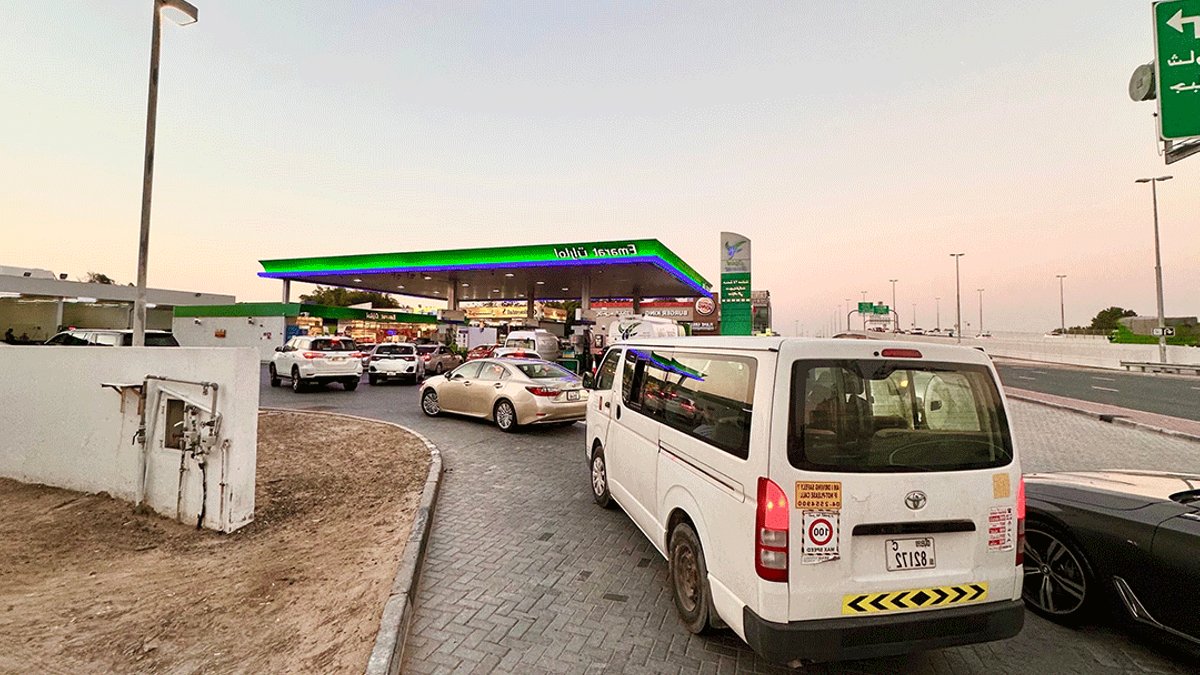
Drivers in Dubai faced long waits at pumps on Wednesday evening to fill tanks before a roughly 16 percent jump in fuel prices, which has pushed all three grades above AED4 per litre as traffic surged across the city.
The new rates took Super 98 to AED4.40, Special 95 to AED4.28, and E-Plus 91 to AED4.21. This price hike marks the highest level in over four years, with Special 95 now only 24 fils below its July 2022 record of AED4.52, and it represents a noticeable shift for everyday motorists.
Market drivers behind the surge
Matt Stanley, head of market engagement at Kpler, said the sharp monthly increase reflects higher crude prices alongside more severe disruption in the market for finished fuels. He noted that Brent crude is around 40 to 45 percent above pre-conflict levels, while diesel prices have risen approximately 90 percent, showing the breadth of the upward pressure.
Constrained Gulf fuel exports and exceptionally high freight costs have made getting finished products to customers more difficult and expensive. The analyst explained that Middle East Gulf crude flows, excluding Iran, have recovered to roughly 16.5 million barrels a day, around pre-war levels. Refined-product flows, however, remain at only about a third of normal, highlighting the ongoing bottleneck.
“We don’t really have a crude shortage story anymore. We have a product shortage and transportation story,” he said. He added that while the direction of the increase did not surprise him, a 16 percent jump in a single month represents a significant move for the regional market.
For a motorist buying 60 litres of Special 95, filling up before the increase saved AED35.40. The same amount now costs AED256.80, compared with AED139.80 in February before the Iran conflict began, an increase of AED117, illustrating the immediate impact on a typical fill-up.
The UAE’s position as a major oil producer does not shield motorists from international price movements. Pump prices have been linked to global markets since deregulation in 2015, meaning local rates follow the value of the finished product abroad rather than the distance the fuel travels. He said drivers pay based on the international benchmark, not on local logistics.


