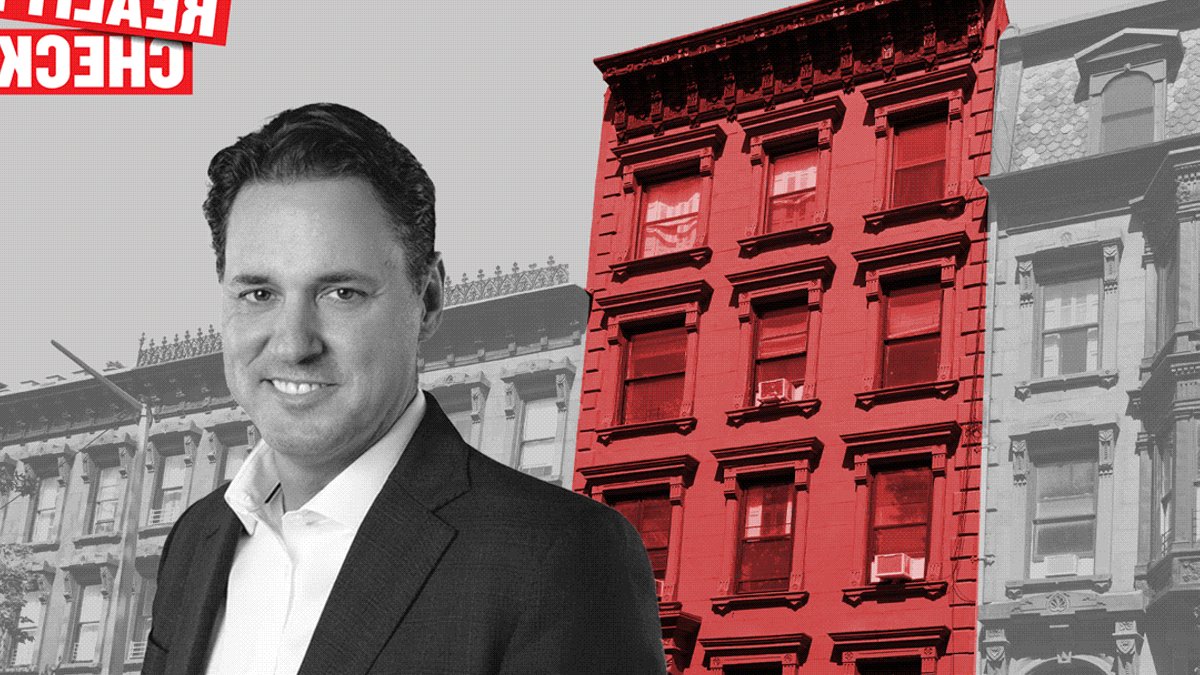
New York City’s newly imposed pied-à-terre tax has forced a longtime Park Slope homeowner to confront a $47,504 surcharge, even though he lives in the house full-time. The tax, which was designed to target luxury second homes, is now being applied to a primary residence, creating confusion for owners who believed they were exempt.
Tax surcharge hits primary resident
Jason B. received a notice from the Department of Finance indicating that his row house in Brooklyn would be subject to the surcharge. He believed the tax targeted only non-residents who kept luxury apartments as secondary homes, so the notice arrived as an unexpected surprise.
The notice listed an annual fee that surprised Jason because his family has owned the property since 1976. He assumed the exemption process would be straightforward, given his status as a full-time resident, and he prepared the documentation he thought would prove his case.
To prove residency, Jason submitted his driver’s license, voter registration, and other documents that typically demonstrate primary-home status. After reviewing the paperwork, the agency then requested the operating agreement for the limited-liability company (LLC) that holds the title, adding an extra layer of complexity to the filing.
When Jason learned that he owned only 50 percent of the LLC, the department ruled the surcharge applicable. The rule cited by officials requires owners to hold a majority interest to qualify for an exemption, meaning that half-ownership was insufficient under the current interpretation.
Ownership rules create loophole
Jason’s brother, who co-owns the LLC, lives a few blocks away and does not occupy the house. The law requires the member who lives in the home to own more than half of the property, a condition that the brothers’ split ownership fails to meet.
Related Post: Asia Pacific property markets face selective second half
Legal analyst Michael Geylick explained that if either brother owned 51 percent, the exemption would apply. He added that holding the property in an LLC, rather than directly by deed, triggered the technical disqualification that now forces the fee.
The city’s 26-page guidance document outlines the requirement that the resident owner hold a majority interest. The fine print in that document contradicts the agency’s website, which states the surcharge applies only to homes not used as a primary residence, creating a mismatch between policy and practice.
Attorney guidance and exemption arguments
Jason B. remained confident after receiving a $47,504 surcharge notice, believing it to be an error he could disprove with residency proof. He recalled Mayor Zohran Mamdani’s claim that tax targeted only non-New Yorkers with secondary units. A lawyer who charged $1,500 warned him not to assert primary-home status, saying such an argument would guarantee loss. Instead, the attorney suggested emphasizing the ground-floor tenant as the strongest point.
Legal challenges and city response
A spokesperson for the Department of Finance said owners may demonstrate primary-residence use under certain circumstances, but did not clarify how partial ownership fits into that framework.
Impact on local property values and conclusion
Jason’s experience highlights the confusion and challenges faced by homeowners affected by the pied-à-terre tax. The city’s implementation of the tax has led to unexpected consequences, with some primary residents being forced to pay the surcharge due to technicalities in the law. Ultimately, Jason’s brother was able to secure an exemption by submitting additional documents and emphasizing the presence of a tenant, but the experience has left Jason shaken and concerned about the arbitrary nature of the tax.


