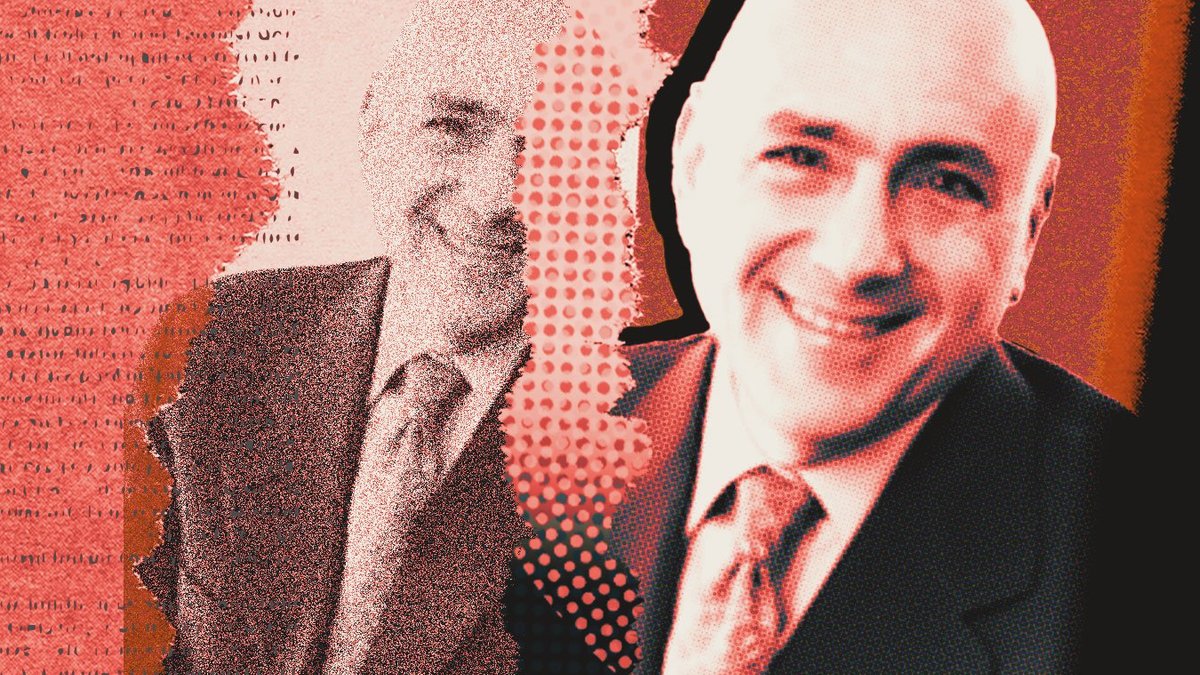
The real estate attorney who stole $14 million from clients’ escrow accounts to prop up his failing businesses has been freed after serving more than four years in prison. Mitch Kossoff, now 73, admitted in a 2021 plea deal that he began diverting funds in 2011 as a temporary fix, then as a last-ditch effort to prevent total collapse. His actions exposed systemic weaknesses in how law firms manage client money, leaving victims struggling for years to reclaim their losses.
Kossoff’s financial troubles began in 2008, when his law firm, Kossoff PLLC, alongside three other ventures—a messenger service, a detective agency, and his parents’ manufacturing company—started hemorrhaging cash. Despite injecting personal savings, the damage was irreversible. “It was like pouring gasoline onto the fire,” he told his parole board in July. By 2011, with no other options left, he began siphoning money from escrow accounts he controlled for clients engaged in property transactions.
Initially, he claimed the funds would be repaid once his firm stabilized. However, the pandemic sealed his fate. Kossoff disappeared in spring 2021 after clients demanded restitution, and his law firm collapsed entirely. He surrendered to authorities, pleaded guilty to three counts of grand larceny and one count of scheme to defraud, and received a sentence of 4.5 to 13.5 years. His legal license was revoked in 2022.
During his incarceration at Groveland Correctional Facility in upstate New York, Kossoff worked as a computer operator and taught Jewish studies. He was released in September after serving just over four years. His parole hearing revealed the full scope of his theft and the limited resources available for victim repayment.
Read Also: NYC pied-à-terre tax levies $47K on resident
How $14M Escrow Theft Fueled a Lavish Lifestyle
The stolen money was meant to rescue his businesses, but it only postponed their inevitable failure. Prosecutors later accused him of using the funds to maintain an extravagant lifestyle, including a $19,000-per-month apartment and $16,000 monthly credit card charges. Kossoff disputed these claims, admitting only that he had used some funds to cover personal expenses after his firms failed. “But because of my own shortcomings I never did that so … to say that none of the money went … to my personal living would be a misstatement I believe.” (Prosecutors in the Manhattan District Attorney’s office, to the contrary, said Kossoff used his clients’ funds to “live a lifestyle that would have otherwise been beyond his means,” citing the apartment rent of $19,000 a month and “an average of more than $16,000 per month on credit card bills alone.”)
Bankruptcy trustee Albert Togut has spent years attempting to recover the stolen funds, filing a lawsuit against JPMorgan Chase for $18.5 million earlier this year. The bank, according to Togut, knew of Kossoff’s theft but took no action. Meanwhile, the Lawyer’s Fund for Client Protection, a state agency compensating victims of attorney misconduct, has begun reimbursing Kossoff’s clients, though the process remains slow and incomplete.
Upon release, Kossoff plans to work as an administrative assistant for a private detective agency. His marriage is strained, and he will live with someone else. He has no personal funds left, having surrendered what little remained to the bankruptcy trustee. He has started writing amends letters to his victims, friends, family, employees, clients and business associates.
He said he’s trying to “balance the scales” for his “horrible decision-making and all the harm” he’s caused. “There’s no excuse or justification for my horrible conduct,” he said. “You can’t put lipstick on a pig here. I did terrible things. A lot of them had to do with defects of my own character, which I’m very well aware of right now, and I think that I have gotten some control over. I would be very grateful to, at least [for] the remaining years that I have left, get out and try to basically make direct amends as best as I can.”
Read Also: Lina Khan Seeks Public-Focused Shift in NYC Economic Policy
From Prison to Apologies: Kossoff’s Struggle for Redemption
With his name tarred by scandal, Kossoff said he hopes to undo some of the damage. “And to try to rewrite my story to some extent … for my kids and what have you so that maybe they’ll regain a little bit of respect for me.” Real estate attorney Mitch Kossoff vanishes, raising questions about clients’ millions Disbarred real estate attorney Mitch Kossoff gets 4+ years in prison
The case has exposed critical weaknesses in how law firms handle escrow funds, which must legally be held in trust for clients. Kossoff’s theft occurred because he had sole control over accounts at JPMorgan Chase, a practice permitted under New York law but widely criticized as inviting misuse.
Victims Left Behind as Recovery Drags On
Togut has warned that full recovery is improbable. Kossoff’s apology letters, while sincere, hold no legal weight, and his new position offers no mechanism for restitution.
Kossoff’s parole conditions include monthly check-ins with a probation officer and a permanent ban on practicing law or working in finance. His first meeting with the officer took place in early October, where he submitted a list of 47 drafted apology letters.


