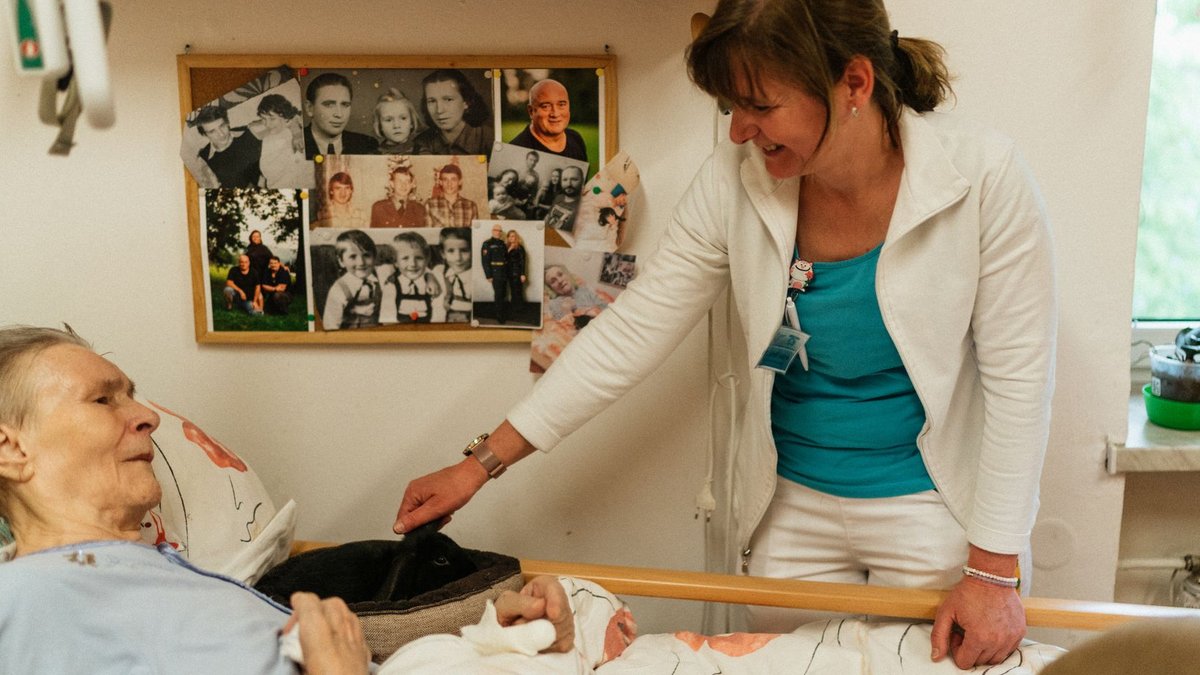
Australia’s growing older demographic is widening the divide between the federal government’s obligations to finance healthcare and social services and its capacity to supply the necessary real estate for those services. This disparity is increasing the involvement of private investment in the childcare, aged care, and healthcare sectors, as highlighted at a CBRE gathering in Melbourne on Wednesday.
“Governments will keep paying for the care…they can’t pay for all the buildings as well…that’s the gap private capital is being asked to fill,” Sandro Peluso, CBRE’s National Director for Australian Healthcare & Social Infrastructure, stated during the address.
However, the surge in demand for these services is not sparking a mass investment wave; rather, capital is becoming highly discriminating regarding which assets and operators it supports. “Capital is deep but it is highly selective…investors are looking beyond the lease to the quality of the operator, the underlying demographics and the long-term sustainability of the asset,” Mr Peluso added.
Aging Population Drives Healthcare Infrastructure Needs
More than 500 attendees, including investors, operators, officials, developers, and property professionals, were present at CBRE’s event, The Impact of Healthcare and Social Infrastructure, held at Crown Palladium. The discussion coincided with the recent release of the federal government’s 2026 Intergenerational Report, which predicts the population of Australians aged 85 and above will triple by 2065-66.
The document also estimates that federal government health expenditure will increase from 4 percent of GDP in 2025-26 to 6.2 percent by 2065-66, while aged-care spending is projected to rise from 1.5 percent to 2.3 percent of GDP. David Koch, a commentator on business and finance who delivered the keynote speech, noted that the demographic outlook offers a rare clarity regarding future needs.
“Demographics are about as close to a sure thing as economics gets,” Koch remarked. “We already know how many 85-year olds we’ll have in 2036 because they’re 75 today.”
The Intergenerational Report forecasts Australia will have 39.3 million people by 2065-66, though deaths are expected to exceed births starting in the 2060s due to declining fertility rates. Koch argued that a major hurdle is whether the necessary infrastructure and workforce will exist to support this ageing population.
“The only question is whether the beds, the carers and the money will be there when they need them,” he added.
The magnitude of the aged-care requirement is already evident in government projections. Koch cited Department of Health research indicating that Australia must open a new aged-care facility every three days for the next two decades, which equates to approximately 10,500 new beds annually.
Nevertheless, for property investors, demographic demand does not guarantee that every healthcare or social infrastructure asset is a viable investment. “Capital is deep but it is highly selective,” Mr Peluso said. “Investors are looking beyond the lease to the quality of the operator, the underlying demographics and the long-term sustainability of the asset.”
Investors Seek Quality Operators and Locations
This nuance was discussed during a panel moderated by journalist Jacqui Felgate, which included Priscilla Radice, the Chief Executive of the Victorian Health Building Authority; Tom Patrick, Managing Director of Barwon Investment Partners; and Georgia Willis, Chief Executive of Regis. Radice outlined the Victorian government’s hospital construction pipeline, which includes the recently finished Footscray Hospital and various projects currently under construction or being delivered across the state.
Patrick suggested that there is room for more private-sector partnerships involving smaller healthcare properties, rather than concentrating investments solely around major hospitals. He also noted the difficulty of attracting medical practitioners to certain locations, noting that doctors and specialists often prefer to work near established employment hubs and residential areas. Consequently, the availability of healthcare real estate depends on factors beyond just the population size of a catchment area.
Marcello Caspani-Muto, a CBRE Director, noted that demographic demand varies within individual markets, using childcare as a prime example. He observed that some regions might possess more childcare centers than others despite having lower underlying demand, showing the importance of aligning supply with local demographics rather than relying on broad population growth trends.
Aged Care vs. Retirement Living Contrasts
Georgia Willis, Regis’s Chief Executive, emphasized that aged care differs fundamentally from retirement living. She argued that facilities must be designed around the daily lives and care requirements of older Australians, rather than simply serving as lodging. Additionally, these two sectors serve distinct markets; aged care is tailored for residents needing higher levels of support, whereas retirement living is generally targeted at more independent individuals.
The distinction is becoming more important as government policy shifts more care into people’s homes while demand for residential aged care continues to rise. Peluso stated that investors are increasingly evaluating healthcare and social infrastructure using both property and operational criteria.
“The strongest healthcare and social infrastructure assets are increasingly being assessed on both their property fundamentals and the sustainability of the underlying service and operator,” he added.
Long-Term Viability of Healthcare Assets
The healthcare and social assistance sector already employs roughly 2.4 million people, making it Australia’s largest employing industry according to the Intergenerational Report. The report also forecasts health and aged-care demand to rise as Australians live longer, with ageing accounting for about one-third of the projected increase in health spending over the next 40 years Mr Peluso said for property owners and investors, that leaves an expanding pool of government-supported service demand but a more selective market for the buildings that accommodate it. The question is increasingly not simply whether an asset has a healthcare or social infrastructure tenant, but whether the operator, location, demographics and building remain viable over the life of the investment, he added.


