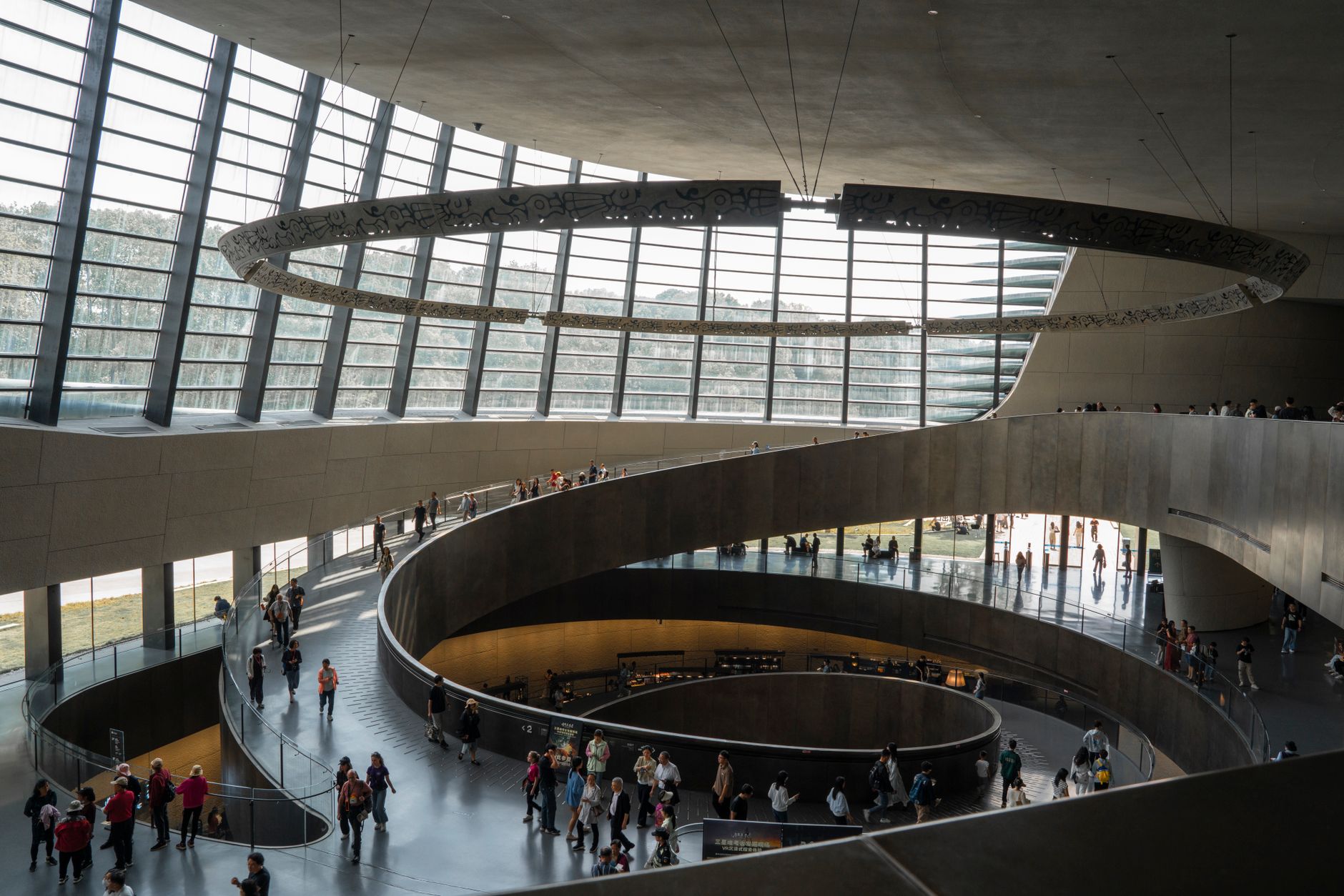
The design choices that make a great museum, restaurant, or hotel are often the ones visitors never consciously notice. Few designers would argue that the buzz around Caviar Kaspia Los Angeles comes down to its banquets, or that il Buco earned its place as a New York institution because of its table settings. The same is true of the bohemian spirit of the Hotel Chelsea or the lush rooftop at The Studio Museum in Harlem. What endures isn’t a single chair, light fixture, or work of art. It’s the atmosphere — built through layers of light, movement, materiality, ritual, and memory that visitors rarely notice individually but experience all at once.
“I always look at the overall design process as creating atmosphere, which to me is different from just visual composition,” said Tiffany Howell, the designer behind Caviar Kaspia LA and founder of Night Palm Studio. “I’m basically creating conditions for people to feel something.”
Related: Anne Hathaway Owns Several Luxury Homes
Lighting as an invisible guide
Howell considers lighting one of the most important and underused layers in a space. “I ask myself, ‘What is this room going to feel like at 7 a.m., 4 p.m., and midnight?’” she said. She studies how sunlight passes through a room, the way it bounces off a furniture piece positioned at a window, and even how it will touch a client’s skin. “Bad lighting can completely make people feel subconsciously unwell,” she added.
For Will Meyer, who has spent more than two decades in hospitality design at Meyer Davis, the strongest destinations begin by listening. “What excites me most about hospitality and cultural projects is the opportunity to build on an existing story,” he said. “Every place has its own history, traditions, and rhythms, and those always become the starting point for our design.”
That approach guided Meyer Davis’s work on the Four Seasons Resort Red Sea. “There, we looked beyond the architecture to the experience of the setting itself. The dunes, coral reefs, mangrove forests, and shoreline informed every aspect of the interiors,” Meyer explained. The goal wasn’t to layer decorative references onto a project, but to create spaces that feel inseparable from their surroundings. “Rather than imposing a design language, our goal was to create one that could only belong to this place.”
Related: 18th-Century Paris Apartment Embraces Happy Gothic Style
Small rituals and the museum challenge
Sometimes the smaller gestures make a destination feel welcoming. At the Jenni Kayne Farmhouse in New York’s Hudson Valley, Kayne focuses on what shifts a guest’s state of mind quickly. “I love lighting the fireplace and opening the windows or doors when I’m hosting,” she said. “The combination of warmth and fresh air creates a feeling that’s difficult to replicate any other way.”
Museums present a different set of demands. Instead of encouraging people to linger over dinner or settle into a hotel room, they ask visitors to slow down, observe, and move with intention. For setting architect Sara Zewde, whose firm Studio Zewde designed the rooftop at The Studio Museum in Harlem, that means creating an environment that reconnects visitors with both the setting and the community.
Related: 5 Helpful Tips When Buying New Home Replacement Windows
“Museums ask visitors to engage deeply, but also impose a certain discipline,” Zewde said. “You typically don’t touch the art, you speak more quietly, you move carefully, and galleries as spaces are often deliberately restrained.” The rooftop offers a counterpoint — a setting where visitors can reconnect with their senses through shade, the breeze, and seasonal plantings. Movement is carefully choreographed. “How people move through the setting is part of how they experience the institution itself,” she added.
For decades, New Yorkers have returned to il Buco as much for its ambiance as its menu.


