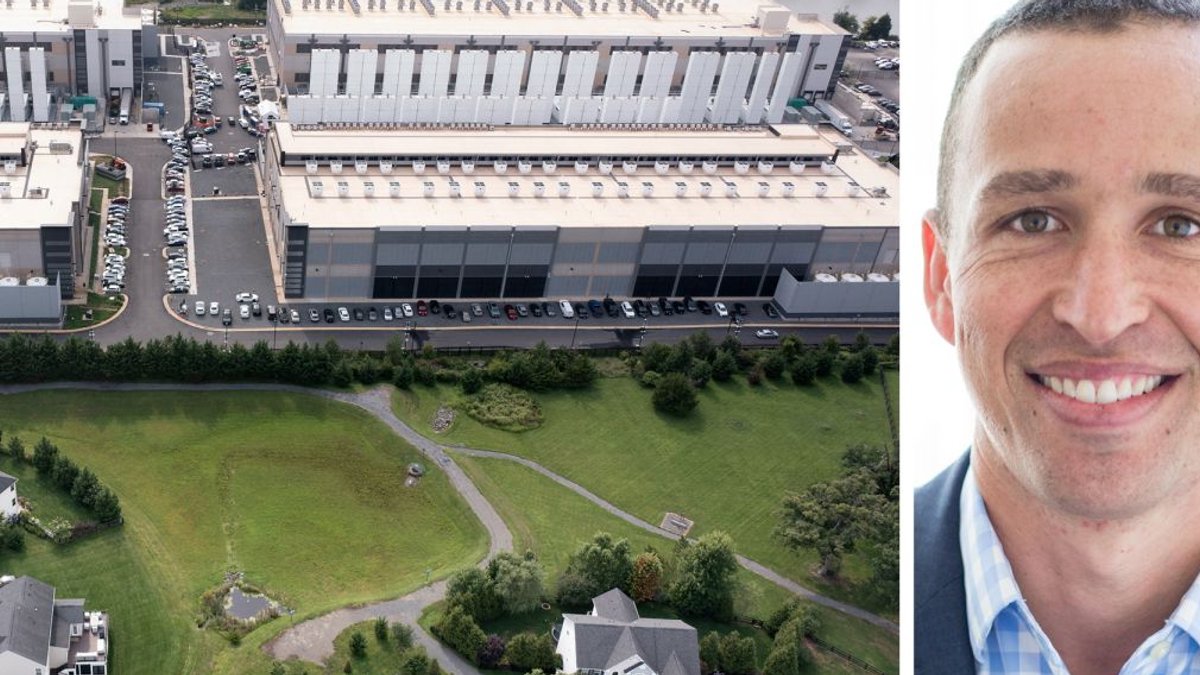
The data center marketplace is growing, with $1.3 trillion of identifiable debt powering this development boom of nearly 4,300 domestic data centers. Atrium, a San Diego-based AI analytics startup, has launched its new interactive data and research platform, “Who Finances America’s Data Centers,” to track the debt dollars behind every data center deal in the U.S.
This platform is a first-of-its-kind resource that uses data collated from local property records, Securities and Exchange Commission credit agreements, commercial mortgage-backed securities (CMBS) securitizations, as well as commercial bank and private credit loan syndications and corporate debt issuances to follow the money behind 3,038 operational data center deals — and another 1,258 that are in different stages of their lifecycles.
Property mortgages, syndicated facilities, private credit, hyperscale corporate debt, and debt from regional utility firms have contributed the vast majority — $1.1 trillion — of U.S. data center development debt. Wells Fargo and J.P. Morgan Chase top the list with $8.2 billion and $6.9 billion in finances, respectively.
Atrium’s website notes that the tool and report are “the first in an ongoing series that will track every identifiable data center investment dollar in the United States” and that it will be updated periodically as deals close, including securitizations and county-level recordings.
Corporate debt from the big five hyperscalers — Amazon, Microsoft, Google, Meta and Oracle — accounts for $223 billion in long-term debt and credit facilities across the data center space, according to Atrium.
Atrium found that $128 billion in data center debt matures between 2025 and 2027 — which exceeds the entire U.S. office CMBS maturity wall in that same timeline — while the already imposing number jumps to $213 billion when the three-year total incorporates 2029.
Related: Muji Signs Lease at Brooklyn Alloy Block
PJM Interconnection, which generates power across 13 U.S. states and Washington, D.C., forecasts 30 gigawatts of incremental data center demand by 2030, equivalent to 30 nuclear reactors, according to Atrium.
The data center industry is at a crossroads, with its growth dependent on factors like power availability and hyperscale demand. The industry will need to adapt and overcome these challenges to continue growing.
Virginia lawmakers have now proposed legislation that will halt data center construction in the state, while companies like QTS and Blackstone have abandoned developments, like the $4.6 billion Virginia Digital Gateway campus the firm planned, due to years of community opposition. Atrium data showed that 48 national developments, representing $158 billion in development capital, were canceled in 2025, a number that has since grown in the first seven months of 2026 to 75 projects, representing $130 billion, that have been blocked or delayed so far this year.
The number of organized opposition groups exploded from 396 at the end of 2025 to 833 across 49 states by the end of first quarter 2026, according to Atrium. The data center industry faces an opposition movement that has crossed from nuisance to existential. As the industry continues to grow, it will be important to address these concerns and find ways to mitigate the risks associated with new homebuilding and data center development.
They will need to find solutions to these problems to ensure the continued growth of the industry. The industry’s growth is dependent on its ability to address these concerns and find ways to mitigate the risks associated with data center development.
It is a complex issue, and there are many factors at play. The industry will need to work together to find solutions to these problems.


